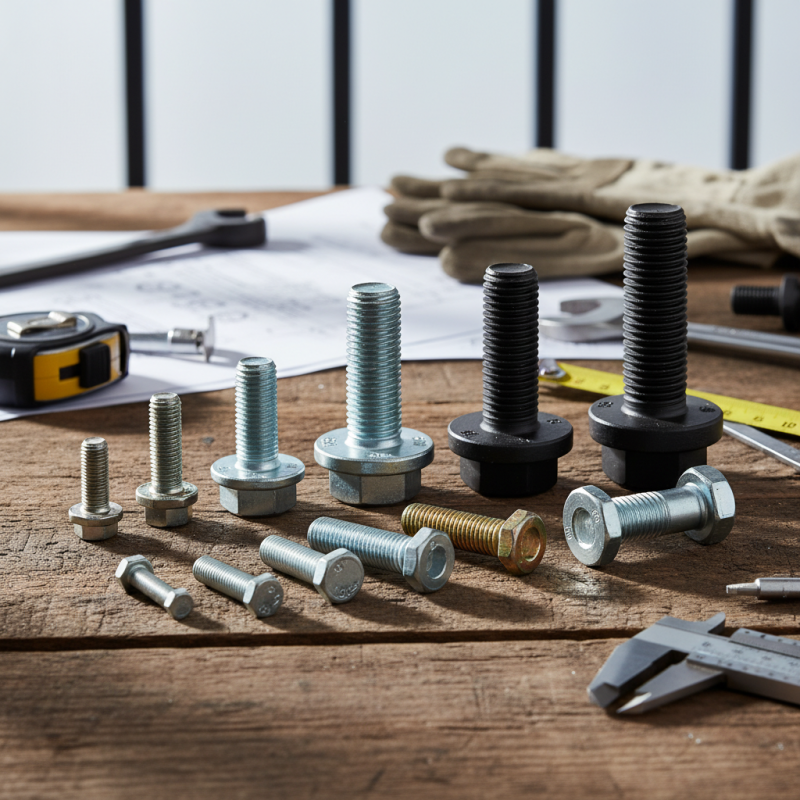
How to Choose the Right Flange Hexagon Bolts for Your Needs?
Choosing the right flange hexagon bolts for your projects can be challenging. These bolts play a vital role in ensuring stability and security in various applications. Understanding the specifications and materials available is crucial.
When selecting flange hexagon bolts, consider size, grade, and coating. Each element impacts performance and durability. Different projects may require unique features. It's essential to match the bolt to your specific needs.
Experience matters here. Factors like load-bearing capacity and environmental conditions can affect the choice. Sometimes, even small details can lead to significant issues down the road. Don't overlook the importance of proper testing methods to ensure that your selected bolts perform as expected.
Understanding the Different Types of Flange Hexagon Bolts Available
When selecting flange hexagon bolts, it's essential to understand the various types available. Flange hexagon bolts come in different materials, sizes, and grades, each serving a specific purpose. Steel bolts are widely used for their strength. Stainless steel options offer better corrosion resistance. For high-stress applications, consider using high-strength bolts to ensure durability.
Choosing the right size is crucial. Measure the diameter and length accurately. Too short or too long could compromise the connection. In many cases, using a bigger diameter provides additional strength. However, it may not fit in tight spaces.
Tips: Always consider the environment where these bolts will be used. Corrosive environments require more resistant materials. Pay attention to the load capacity as well; it varies with the bolt type. Evaluate the reliability of your supplier. The best bolts come from trusted manufacturers with quality assurance. They should provide materials that meet industry standards.
Material Selection: Choosing Between Stainless Steel, Carbon Steel, and Alloys
When selecting flange hexagon bolts, material choice plays a crucial role. Stainless steel, carbon steel, and alloys each have unique properties. According to recent industry reports, stainless steel is favored for its corrosion resistance. It is particularly effective in harsh environments, with a high resistance to oxidation and rust. This durability ensures longevity, reducing maintenance costs over time.
On the other hand, carbon steel is known for its strength and toughness. It is often the go-to choice for applications where high strength is required. However, it lacks the corrosion resistance of stainless steel. A study indicated that carbon steel bolts may corrode when exposed to moisture. This could lead to premature failure if not properly protected.
Alloys can provide a balance between the strength of carbon steel and the corrosion resistance of stainless steel. However, their cost can be a significant factor. Not all projects justify the expense of alloy bolts. Understanding the specific application requirements and environmental conditions is essential before making a decision. Reflecting on these details can prevent costly mistakes.
Recognizing Load Ratings: How to Match Bolts with Project Specifications
Choosing the right flange hexagon bolts can be challenging. Load ratings are crucial in matching bolts to your specific project needs. It’s important to understand the weight a bolt can bear. Each bolt comes with a specified load rating, which helps determine its strength and application.
When selecting bolts, consider the environment where they will be used. High temperatures or corrosive conditions can affect performance. Match the load rating with the demands of your project. For instance, a construction project may require bolts that can handle heavy loads. Misjudging the load rating can lead to catastrophic failures.
It's essential to consult industry standards and guidelines. They provide reliable data on load ratings and material specifications. While it can be tempting to cut costs, using under-rated bolts is a poor decision. Always verify the specifications to ensure safety and reliability. Bolts that don't meet the required standards can lead to severe consequences, creating a serious safety hazard.
Corrosion Resistance: Selecting the Right Coating for Environmental Conditions
Corrosion resistance is crucial when selecting flange hexagon bolts. The environmental conditions where bolts will be used directly influence their longevity. Areas with high humidity, salt exposure, or industrial pollutants present more significant challenges. Choosing an appropriate coating can mitigate these risks.
There are various coatings available, such as zinc plating and epoxy, each with unique benefits. Zinc plating offers good corrosion resistance but may not hold up in severe environments. Epoxy coatings provide excellent protection in harsh conditions but can be more expensive. Always assess the specific environment before making a decision.
Tips: Consider the pH levels and moisture content in your environment. Conduct regular inspections to identify corrosion early. Sometimes, the coating may wear off faster than expected. Adjust your maintenance schedule accordingly. Understanding these factors enhances the reliability of your chosen bolts.
Standardization and Sizing: What You Need to Know About Bolt Dimensions and Grades
When selecting flange hexagon bolts, understanding dimensions and grades is crucial. Bolt dimensions, including length, diameter, and thread pitch, determine how well they perform in specific applications. A proper fit ensures that the bolts can withstand stress and tension. Standard metric measurements are commonly used, but imperial sizes are also available. Knowing the correct dimension helps in achieving the desired mechanical performance.
Grades indicate the strength and quality of bolts. Each grade represents different tensile strengths and material compositions. For instance, higher-grade bolts are designed for heavy-duty applications. It is essential to match the bolt grade with the material and conditions of your project. Incorrect grading can lead to failure. Many users overlook this aspect, leading to potential safety hazards.
Choosing the right bolts requires careful consideration of both dimensions and grades. Crafting a reliable solution may involve trial and error. Testing different options is sometimes necessary to find the best fit. Be mindful that what works in one scenario may not work in another. It's vital to keep learning and adapting to ensure optimal performance in your projects.
 English
  Česká republika
 Deutsch
 Dutch
Dutch Polska