How to Choose the Right Bandpass Filters for Your Needs?
Choosing the right Bandpass Filters can be a daunting task. These filters play a crucial role in various applications, from telecommunications to medical devices. Understanding their specifications is essential. They allow certain frequencies to pass while blocking others, making them vital for signal processing.
When selecting Bandpass Filters, consider key factors like bandwidth, center frequency, and insertion loss. These elements directly impact performance. A filter’s quality can significantly influence system efficiency. The market offers a plethora of options, which might overwhelm newcomers. Many users struggle with the technical details and specifications.
It’s important to reflect on your specific needs. Are you focusing on audio applications or RF signals? Each use case requires a tailored approach. Evaluating your priorities can simplify your decision-making process. Seeking expert advice can also enhance your choice, ensuring reliability and effectiveness in your application.
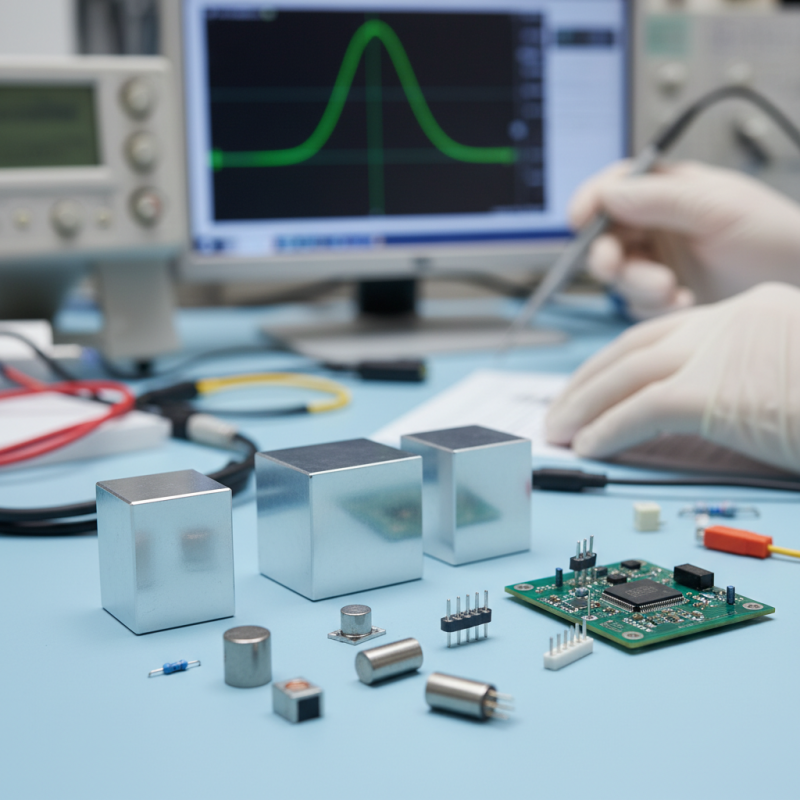
Understanding Bandpass Filters: Overview and Applications
Bandpass filters are essential in various applications, from telecommunications to audio engineering. They allow signals within a certain frequency range to pass while attenuating those outside this range. This capability is crucial for effectively isolating desired signals and improving overall system performance.
In telecommunications, bandpass filters help in managing signal interference. By restricting unwanted frequencies, they ensure clearer communication lines. In audio engineering, these filters allow sound engineers to isolate specific frequencies, enhancing sound quality. Choosing the right bandwidth and cutoff frequencies is vital. Miscalculating these parameters can lead to poor performance or unintended noise.
Understanding the specifications of bandpass filters is important. Different applications require different filter designs. Some may need sharp cuts at both ends of the spectrum, while others need a gentler slope. Reflecting on your specific needs can lead to better decisions. It is often a trial-and-error process. Being aware of potential shortcomings can guide you in refining your filter selection for optimal results.
Key Parameters for Selecting Bandpass Filters: Gain, BW, and Insertion Loss
Choosing the right bandpass filter can be daunting. Key parameters like gain, bandwidth (BW), and insertion loss play crucial roles in this decision-making process. Gain reflects the filter's ability to amplify the signal within its passband. A higher gain can enhance signal clarity but may introduce noise. Make sure to measure your system's requirements before selecting a filter.
Bandwidth is another vital factor. It defines the frequency range in which the filter operates effectively. A narrow bandwidth filters out unintended frequencies but might limit the desired signal. Conversely, a wider bandwidth might let more signals through but could also allow noise. Think about the specific applications. For precise tasks, a narrow bandwidth is often necessary.
Insertion loss indicates the amount of signal power lost when passing through the filter. Lower insertion loss is preferable to maintain signal integrity. However, it’s essential to strike a balance. Filters with low insertion loss might compromise gain or bandwidth. Experimenting with different filters in real-world scenarios often reveals unexpected challenges. Users may find that the initial choice doesn't always yield the best results. Continuous evaluation is key to optimizing performance.
Key Parameters for Selecting Bandpass Filters
Analyzing Frequency Range Requirements for Your Specific Application
When analyzing frequency range requirements, understanding your application's needs is crucial. Bandpass filters allow specific frequencies to pass while blocking others. This capability is essential in various applications, from audio engineering to telecommunications. Identifying the frequency range needed for your project is the first step.
Consider the specific frequencies that are relevant to your application. For audio applications, determine the frequency range of the signals you wish to preserve. For communication systems, analyze the frequencies that carry your data. It's essential to strike a balance; a filter should accommodate slight variations in frequency to ensure functionality.
**Tips:** Test different filter configurations. Sometimes, an unexpected setup could provide better results. Pay attention to the filter’s shape and bandwidth. A narrower bandwidth can mean tighter control over frequencies, but at the cost of flexibility. Moreover, always evaluate the insertion loss of the filter to ensure it doesn’t distort your signals. Reflecting on these details can help refine your decision-making process.
Comparing Passive vs. Active Bandpass Filters: Pros and Cons
When selecting a bandpass filter, understanding the differences between passive and active options is crucial. Passive bandpass filters utilize resistors, capacitors, and inductors. They have simpler designs and do not require external power. According to a 2022 report by the International Journal of Electronics, passive filters are generally more reliable due to fewer components that could fail. These filters are often preferred in low-frequency applications, such as audio processing.
Active bandpass filters, on the other hand, employ operational amplifiers. They can provide signal gain and sharper frequency selectivity. A study by the IEEE explores that active filters perform better in high-frequency applications. However, they require power sources, which may introduce noise. One downside is that they can be more complex, leading to higher design time and potential stability issues. Engineers need to reflect on these factors when choosing between the two.
A practical consideration is the application environment. Passive filters may perform well under stable conditions. However, they might fail to attenuate unwanted frequencies adequately in dynamic settings. In contrast, active filters can adapt better but are sensitive to power fluctuations. Each option presents trade-offs, and understanding these nuances helps in making informed choices for specific needs.
Evaluating Component Quality and Manufacturer Reputation in Filter Selection
When selecting bandpass filters, evaluating component quality is crucial. Filters need high precision and stability. According to a report from the Institute of Electrical and Electronics Engineers (IEEE), around 40% of system performance issues stem from subpar components. This emphasizes the importance of rigorous quality checks during manufacturing.
Manufacturer reputation plays a significant role in filter longevity and performance. The International Telecommunication Union (ITU) states that filters from reputable manufacturers typically exhibit a 20% longer lifecycle. They often adhere to strict quality control processes. Choosing a well-reviewed manufacturer can sometimes prevent costly failures and inefficiencies in the long run.
However, not all well-known brands guarantee the best quality. Some smaller manufacturers may offer exceptional products at competitive prices. A thorough research process can unveil hidden gems. It's essential to weigh the benefits of premium brands against emerging alternatives. Balancing cost and quality requires careful consideration. The right choice can lead to significant operational improvements.
How to Choose the Right Bandpass Filters for Your Needs?
| Parameter | Value | Importance |
| Center Frequency (fc) | 1.5 GHz | Critical |
| Bandwidth (BW) | 100 MHz | High |
| Insertion Loss | 3 dB | Important |
| Power Handling | 10 W | Very Important |
| Temperature Range | -40°C to +85°C | Moderate |
| Size (Dimension) | 50 x 25 x 20 mm | Considerable |
| Manufacturer Reputation | High | Essential |
 English
  Česká republika
 Deutsch
 Dutch
Dutch Polska

