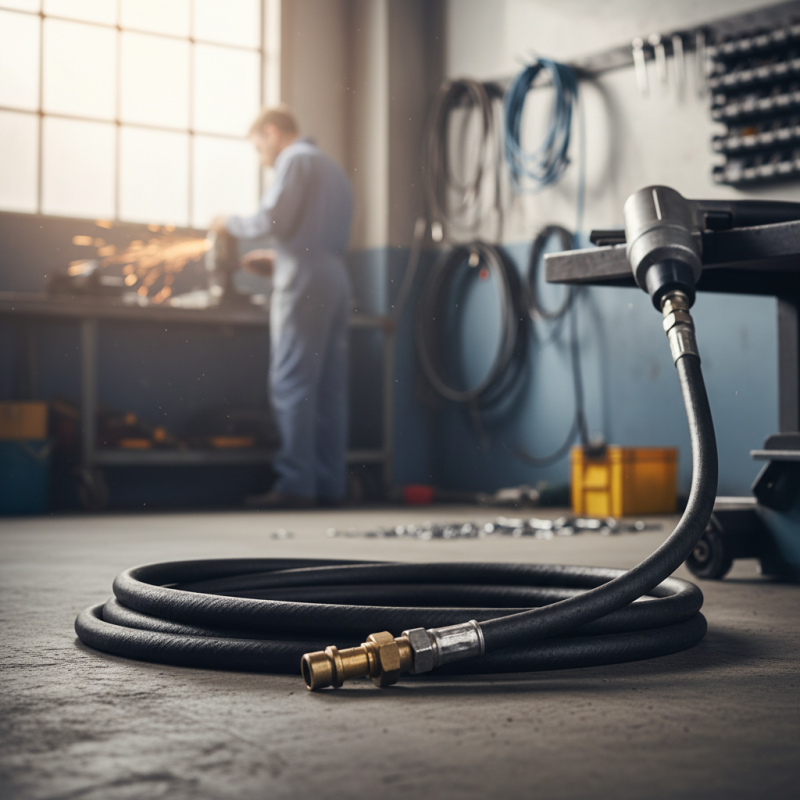
What is a Rubber Air Hose and How Does It Work?
A rubber air hose is a vital tool in various industries. It delivers compressed air to power tools and equipment. Understanding how it works enhances its effectiveness. This hose is made of durable rubber, which provides flexibility and resilience.
When using a rubber air hose, one must consider its length and diameter. A longer hose may decrease air pressure. However, a thicker hose can maintain pressure better. It’s essential to choose the right size to avoid inefficiencies. Improper maintenance can lead to wear and tear, affecting performance.
Users should also reflect on their usage habits. Storing the hose improperly can cause damage. Regular inspection helps identify potential issues. This awareness can prolong the lifespan of the rubber air hose. Ultimately, recognizing its importance ensures better outcomes in any project.
What is a Rubber Air Hose?
A rubber air hose is a flexible tube designed to transport compressed air. It is commonly used in various applications, including automotive repairs and DIY projects. The durability of rubber makes it a popular choice, as it can withstand wear and tear. These hoses are often resistant to abrasion, making them ideal for rough environments.
The design of rubber air hoses allows them to handle high pressure. They can expand and contract, making them less likely to kink or twist. The flexibility is a double-edged sword, though. While it provides ease of movement, improper storage can lead to damage or deformation. It’s essential to handle these hoses with care.
In addition, maintaining these hoses is crucial for longevity. Regular inspections can identify cracks or leaks. Small issues can escalate into significant problems if ignored. Overall, understanding how a rubber air hose works is vital. Proper usage and maintenance can enhance performance and safety.
Key Features of Rubber Air Hoses
Rubber air hoses are essential tools in various applications. They are designed to transport compressed air efficiently. Their flexibility stands out, making them ideal for tasks requiring mobility. From workshops to construction sites, they play a vital role. Rubber hoses can handle high pressures too. This durability ensures they last longer under stress.
Key features of rubber air hoses deserve attention. They are often resistant to heat and abrasion, allowing them to be used in harsh conditions. Many have reinforced layers to prevent leaks. Their lightweight nature enhances portability. However, while they are robust, some may still remain prone to kinks. Users should watch for this tendency. Proper handling is important to extend their lifespan.
Another notable feature is the temperature range they can handle. Rubber hoses function well in hot and cold environments. This versatility adds to their appeal. Though they are reliable, occasional wear and tear can occur. Regular inspections help identify potential issues. Being proactive can prevent unexpected downtime in projects.
How a Rubber Air Hose Functions
A rubber air hose serves a critical role in various applications. It connects air compressors to tools and equipment, providing a reliable flow of compressed air. Most rubber hoses are flexible and durable, designed to withstand tough conditions. They can operate in various temperatures, making them suitable for many environments.
How does a rubber air hose function? Air from the compressor travels through the hose. The inner lining ensures the air pressure remains high, while the rubber exterior protects against wear. Proper fittings are essential; leaks can easily occur if they aren’t secure. A poorly fitted hose can lead to wasted energy and reduced performance.
Despite their advantages, rubber air hoses have limitations. Over time, they may become brittle or develop cracks. This deterioration can reduce efficiency. Regular inspections can help maintain their integrity. Using a hose reel can also prevent tangling and stress on the hose. In practice, attention to detail is key to effective use. When neglected, even the best hose won’t perform.
Common Applications of Rubber Air Hoses
Rubber air hoses play a crucial role in various applications. They are widely used in construction sites, workshops, and automotive industries. These hoses transfer compressed air from compressors to tools or machinery. Their flexibility allows for ease of movement, even in tight spaces.
In construction, rubber air hoses connect pneumatic tools like nail guns and jackhammers. They provide the necessary air pressure for these tools to function effectively. Workshops often utilize them for air-powered equipment, where they enable tasks such as painting and cleaning. The durability of rubber ensures these hoses withstand tough conditions, yet they can wear over time.
Automotive garages also benefit from rubber air hoses. Mechanics use them for tire inflation and spray painting. The hoses handle high pressure, making them reliable for most tasks. However, not all hoses are created equal. Users must choose the right size and length. Incorrect selections can lead to inefficiencies or even damage to the tools being powered. It's important to check for wear and tear regularly to ensure safety and functionality.
Common Applications of Rubber Air Hoses
Maintenance Tips for Rubber Air Hoses
Rubber air hoses are essential tools in various industries. However, proper maintenance is key to their longevity and performance. Regular inspections help catch wear and tear early. Look for cracks, leaks, or kinks. These issues can compromise hose efficiency and pressure. Replace damaged parts promptly to prevent further damage.
Keep your rubber air hose clean. Dust and debris can build up, affecting airflow. Use a damp cloth to wipe it down after each use. Store the hose properly. Avoid tight coils that can create memory bends. Instead, use a hose reel or hang it loosely to maintain its shape. This simple act can greatly extend the life of your hose.
Pay attention to temperature extremes. Rubber can degrade when exposed to harsh elements. If working in hot or cold conditions, check your hose frequently. Your air hose might seem fine, but hidden weaknesses can lead to failures. Don't overlook routine care. A small effort today can save you time and money tomorrow.
 English
  Česká republika
 Deutsch
 Dutch
Dutch Polska