 English
  Česká republika
 Deutsch
 Dutch
Dutch Polska


Top 10 CNC Wood Cutting Machines for Sale Worldwide
Choosing a cnc wood cutting machine is rarely about finding the most expensive model. It is about matching cutting performance, workshop space, materials, and production goals. A compact machine may suit custom furniture makers, while a larger router can handle cabinet panels, doors, and repeated commercial work.
This guide examines ten CNC wood cutting machines available from suppliers worldwide. Each option is considered through practical criteria, including spindle power, working area, positioning accuracy, software compatibility, dust collection, safety features, and after-sales support. These details matter when cutting plywood, MDF, hardwood, or delicate decorative panels. A machine with impressive specifications may still disappoint if replacement parts are difficult to obtain. Local service matters.
Real workshop conditions often reveal more than product brochures. Operators should check vibration, noise, tool-changing speed, clamping stability, and the cleanliness of finished edges. A reliable supplier should provide clear manuals, training resources, warranty terms, and documented safety guidance. Buyers should also confirm voltage requirements, installation conditions, and applicable regional standards before ordering.
No ranking is perfect. A machine that performs well in a large factory may be unsuitable for a small studio. Budget estimates can also change after shipping, software, tooling, and installation costs are included. Therefore, this selection is intended as a practical starting point, not a universal verdict. Compare carefully. Ask specific questions. The right choice should support safe work, consistent results, and realistic long-term growth.
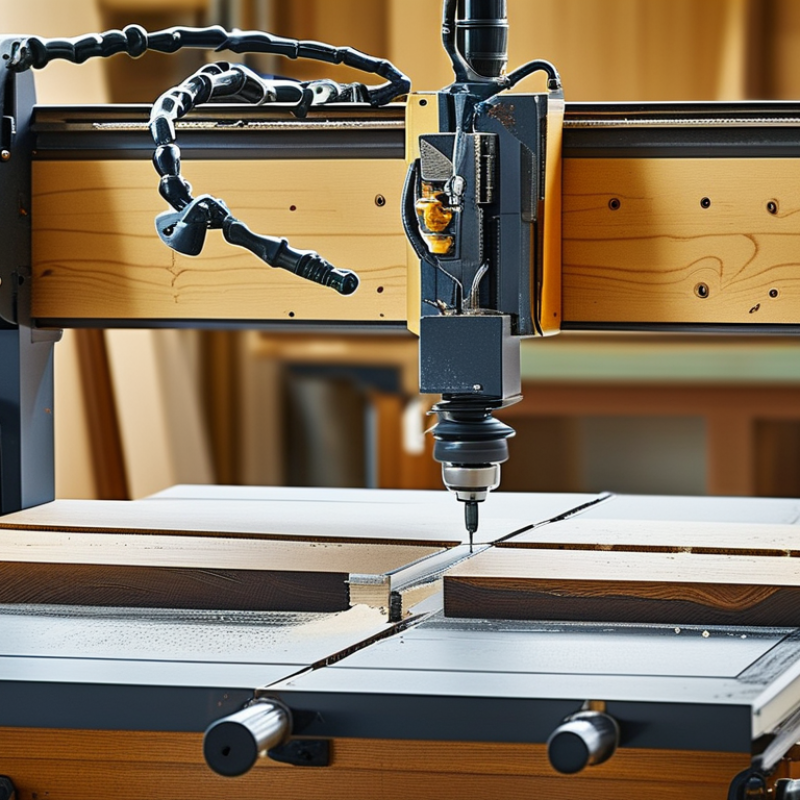
CNC Wood Cutting Basics: Axes, Spindles, Feed Rates, and Cutting Depths
Choosing among the top 10 CNC wood cutting machines for sale worldwide starts with understanding how the machine cuts, not just its price.
Most furniture panels use a three-axis router. The X and Y axes move across the work surface, while the Z axis controls height. A rotary fourth axis helps cut legs, posts, and other rounded parts. Five-axis machines handle complex angles, but they require stronger programming skills. A spindle with adjustable speed suits different woods and cutter sizes. Hard timber usually needs slower movement and careful chip removal. Softwood may allow faster feed rates, but excessive speed can burn the edge.
Cutting depth should match the cutter diameter and material stability. A shallow first pass often gives cleaner results than one aggressive cut. Feed rate also depends on spindle speed, flute count, and chip load. There is no single perfect setting. I have seen operators copy online values and produce rough edges because their tooling was dull. That mistake is easy to repeat.
Tips: Test settings on scrap wood first. Listen for a steady cutting sound. If the cutter squeals, reduce speed or increase feed carefully. Keep the first pass modest, often around one-third of the cutter diameter. Measure the actual depth after setup, because spoilboards are not always perfectly level. Dust extraction matters too; packed chips can affect accuracy and create avoidable heat. Small errors become obvious on long cabinet panels.
Top 10 CNC Wood Cutting Machines for Sale Worldwide - CNC Wood Cutting Basics: Axes, Spindles, Feed Rates, and Cutting Depths
| Rank | Machine Configuration | Typical Working Area | Axes | Typical Spindle | Common Feed Rate | Recommended Cutting Depth per Pass | Suitable Wood Materials | Best-Fit Applications |
|---|---|---|---|---|---|---|---|---|
| 1 | Industrial 3-Axis ATC Router | 1,300 × 2,500 mm 51 × 98 in |
X, Y, Z | 9–12 kW 18,000–24,000 rpm |
8–20 m/min 315–787 in/min |
6–12 mm in plywood or solid wood with a suitable cutter | Plywood, MDF, particleboard, hardwood, softwood | Furniture panels, cabinet parts, doors, nesting, production routing |
| 2 | Heavy-Duty 3-Axis Production Router | 1,500 × 3,000 mm 59 × 118 in |
X, Y, Z | 12–15 kW 18,000–24,000 rpm |
10–25 m/min 394–984 in/min |
8–15 mm per pass for flat-sheet materials | MDF, plywood, laminated board, solid timber | High-volume panel cutting and continuous manufacturing |
| 3 | Vacuum-Table Nesting CNC Router | 2,100 × 3,100 mm 83 × 122 in |
X, Y, Z | 6–12 kW 18,000–24,000 rpm |
10–25 m/min 394–984 in/min |
4–10 mm per pass, depending on sheet thickness and tool diameter | Plywood, MDF, OSB, melamine board, composite wood panels | Nested cabinet components, optimized sheet utilization, batch cutting |
| 4 | Compact 3-Axis CNC Wood Router | 600 × 900 mm 24 × 35 in |
X, Y, Z | 1.5–3 kW 12,000–24,000 rpm |
3–10 m/min 118–394 in/min |
2–6 mm per pass in hardwood; up to 8 mm in softer sheet goods | Hardwood, softwood, plywood, MDF, acrylic wood composites | Prototyping, signs, small furniture parts, craft production |
| 5 | 4-Axis Rotary CNC Router | Rotary length: 1,000–2,000 mm 39–79 in |
X, Y, Z, A | 3–6 kW 12,000–24,000 rpm |
3–12 m/min 118–472 in/min |
3–8 mm radial depth per pass | Solid wood, laminated timber, round stock, engineered wood | Table legs, posts, columns, balusters, cylindrical carvings |
| 6 | 4-Axis Swing-Head CNC Router | 1,300 × 2,500 mm 51 × 98 in |
X, Y, Z, A or B | 6–9 kW 12,000–18,000 rpm |
5–15 m/min 197–591 in/min |
4–10 mm per pass on angled or contoured surfaces | Solid wood, plywood, MDF, laminated panels | Angled joinery, sculptural furniture, complex reliefs, deep side cuts |
| 7 | Automatic Tool-Changing Carving Router | 1,300 × 2,500 mm 51 × 98 in |
X, Y, Z | 6–9 kW 18,000–24,000 rpm |
5–18 m/min 197–709 in/min |
2–6 mm for carving; 5–10 mm for roughing | Hardwood, softwood, MDF, plywood | 3D reliefs, decorative panels, carved doors, lettering, moldings |
| 8 | CNC Beam Saw and Routing Cell | Panel capacity: up to 2,100 × 3,700 mm 83 × 146 in |
Typically 3–4 controlled axes | 5.5–9 kW routing spindle 3,000–6,000 rpm saw unit |
5–15 m/min routing feed 197–591 in/min |
Full sheet thickness in one saw cut; routing depth typically 4–10 mm | Plywood, MDF, particleboard, laminated panels | Panel sizing, cabinet production, drilling and routing in one workflow |
| 9 | CNC Wood Drilling and Routing Machine | 1,300 × 2,500 mm 51 × 98 in |
3-axis routing with vertical and horizontal drilling | 4.5–7.5 kW router spindle Individual drilling motors |
5–15 m/min 197–591 in/min |
Drilling: full board thickness Routing: 3–8 mm per pass |
MDF, particleboard, plywood, laminated furniture panels | Dowels, hinge holes, shelf holes, cabinet component machining |
| 10 | CNC Oscillating-Knife and Router Combination | 1,300 × 2,500 mm 51 × 98 in |
3-axis routing plus tangential or oscillating knife axis | 3–6 kW 12,000–24,000 rpm |
3–12 m/min 118–472 in/min |
Router: 2–8 mm per pass Knife: typically full sheet thickness |
Thin plywood, cork, veneer, cardboard, foam board, softwood sheets | Packaging prototypes, templates, veneer work, thin wood components |
| Technical note: Actual cutting performance depends on cutter diameter, flute count, tool material, spindle speed, chip load, wood species, moisture content, workholding, and machine rigidity. The listed feed rates and cutting depths are practical starting ranges rather than universal operating limits. Always verify settings with the machine and tool manufacturer before production use. | ||||||||
Related Posts
-
How to Choose the Right Wood CNC Machine for Your Project Needs
-
How to Choose the Best Wood CNC Machine for Your Business?
-

Maximizing Efficiency: The Unmatched Advantages of CNC Wood Cutting Machines for Modern Manufacturing
-
How to Choose the Best Wood CNC Machine for Your Needs?
-

Ultimate Guide to Mastering Your First Desktop CNC Mill for Precision Engineering
-
Unlocking the Future of Manufacturing at the 2025 China Import and Export Fair with Desktop CNC Machines